
ME99 Responsible Gaming Guide
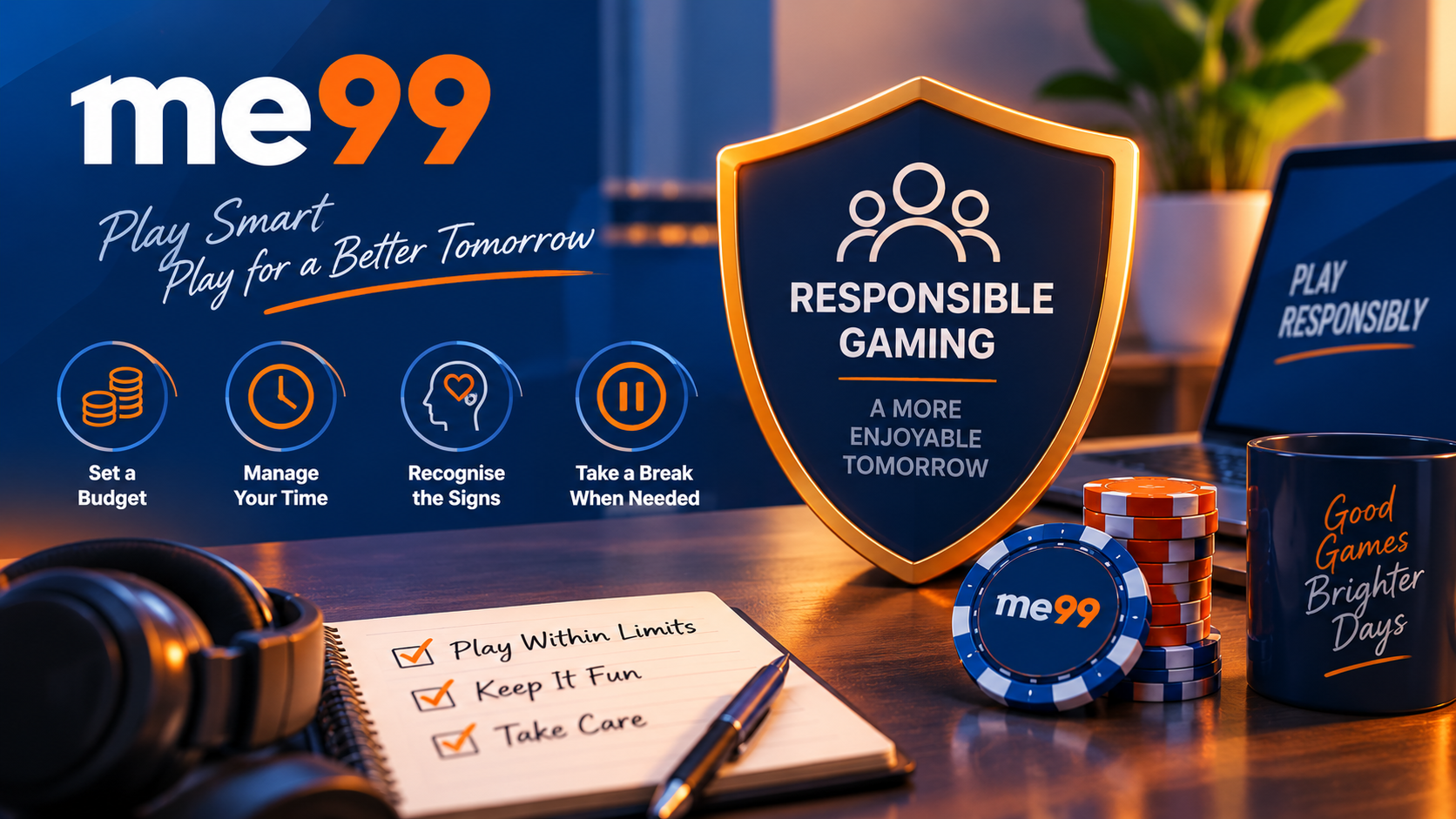
At ME99, we believe gaming should remain a form of entertainment rather than something that creates pressure on your finances, relationships or daily life.
Responsible gaming starts with knowing how much time and money you are comfortable spending before you play. It also means sticking to those boundaries, understanding that gambling outcomes are uncertain and stepping away when gaming stops being enjoyable.
This ME99 responsible gaming guide provides practical information on setting an entertainment budget, managing session time, recognising early warning signs and knowing when it may be better to take a break or seek independent support.
Responsible gaming is not about judging how someone chooses to spend their free time. It is about helping gaming remain affordable, controlled and balanced with the rest of everyday life.
Table of Contents
What Responsible Gaming Means
Responsible gaming means treating gambling as paid entertainment, not as a reliable way to earn money, replace income or solve financial problems.
Sometimes a gaming session may end with a win and sometimes with a loss, but neither result changes the uncertainty of the next game. There is no guarantee that continuing to play will recover money that has already been lost.
A responsible gaming approach starts before the first wager. Decide how much you can comfortably spend, how long you intend to play and what will make you stop.
A few habits can make responsible gambling easier to maintain:
- Only gamble with money set aside for entertainment.
- Never use money needed for bills or essential expenses.
- Avoid chasing previous losses.
- Take regular breaks.
- Avoid gambling when feeling stressed, upset or overwhelmed.
- Stop if gaming no longer feels enjoyable or controlled.
Gaming Should Stay Within an Entertainment Budget
Before starting a gaming session, decide how much money you are comfortable spending.
Your responsible gaming budget should only come from money left after rent, bills, food, savings and other essential expenses have already been covered. Money needed for everyday responsibilities should never become part of a gambling budget.
It can help to think of gaming in the same way as other paid entertainment. If you set aside a certain amount for a night out, movie or hobby, once that amount has been spent, the activity is finished.
The same principle applies here. Avoid increasing your budget simply because a previous session ended in a loss.
A useful rule is to choose an amount that you could lose without creating financial stress. If losing the full amount would make it harder to pay a bill or meet an important expense, the limit is too high.
Set Time Boundaries Before You Play
Responsible gaming is not only about money. Time matters as well.
Gaming sessions can sometimes continue longer than originally planned, particularly when there is no clear stopping point. Before playing, decide how much time you want to spend and use a phone alarm or reminder if necessary.
Regular breaks can also make it easier to notice tiredness, frustration or impulsive decisions.
Step away from the screen, get something to eat, rest, exercise or spend time on other activities. Gaming should fit around your normal routine rather than replacing it.
If you regularly plan to play for a short period but find yourself continuing much longer, take that as a reason to review your habits and set firmer time boundaries.
Know the Difference Between Entertainment and Chasing Losses
One of the most important responsible gaming habits is avoiding the urge to chase losses.
Chasing losses happens when someone continues playing, increases their spending or changes their original limit specifically to recover money that has already been lost.
A previous loss cannot make the next game more likely to win.
If you find yourself thinking that one more game or one larger wager will bring you back to even, that is a useful signal to stop.
Step away, review the budget you originally set and avoid making financial decisions while frustrated.
Recognising Early Warning Signs
Gambling-related problems do not always appear suddenly. Sometimes changes happen gradually, which is why recognising early warning signs is an important part of responsible gaming.
Financial Warning Signs
- Spending more on gambling than originally planned.
- Using money intended for bills, food, savings or other essential expenses.
- Borrowing money to continue gambling.
- Increasing spending after previous losses.
- Feeling stressed about gambling-related expenses.
- Hiding gambling-related spending from other people.
- Delaying important payments because gambling has taken priority.
Behavioural and Emotional Warning Signs
- Thinking about gambling frequently when not playing.
- Finding it difficult to stop at the planned time.
- Regularly playing for longer than intended.
- Gambling mainly to escape boredom, stress, loneliness or frustration.
- Feeling irritated or anxious when unable to gamble.
- Hiding how much time or money has been spent.
- Losing interest in work, study, hobbies, friends or family activities.
One warning sign alone does not automatically mean there is a gambling problem.
However, if several signs begin appearing more frequently or start affecting daily life, responsible gaming may mean taking a longer break and speaking with an independent support service.
Keep Gambling Separate From Important Financial Decisions
Gaming money should remain separate from household expenses and other important financial commitments.
Avoid using borrowed money, emergency savings or money intended for essential expenses to gamble.
Gambling should also never be treated as a way to repay debt or solve a temporary cash-flow problem.
Review your spending outside of a gaming session, when you are able to look at the numbers more objectively.
If your financial situation changes, reduce your gambling budget or take a break rather than increasing your spending in an attempt to compensate.
Do Not Gamble to Manage Difficult Emotions
Stress, boredom, loneliness and frustration can sometimes make gambling feel like an easy distraction.
However, using gambling as the main way to cope with difficult emotions can make responsible gaming limits harder to maintain.
If you notice that the urge to gamble is strongest when you are upset or under pressure, consider doing something else first.
Going for a walk, exercising, listening to music, speaking with a friend or returning to another hobby can provide a break without putting money at risk.
Keep Gambling Separate From Important Financial Decisions
Gaming money should remain separate from household expenses and other important financial commitments.
Avoid using borrowed money, emergency savings or money intended for essential expenses to gamble.
Gambling should also never be treated as a way to repay debt or solve a temporary cash-flow problem.
Review your spending outside of a gaming session, when you are able to look at the numbers more objectively.
If your financial situation changes, reduce your gambling budget or take a break rather than increasing your spending in an attempt to compensate.
Responsible Gaming Tools and Personal Controls
Responsible gaming controls can provide an additional layer of structure when they are available.
Depending on the account features currently offered, these may include spending or deposit limits, session reminders, temporary account restrictions or other safer gambling controls.
Availability may vary. If you are unsure which controls are currently available on your ME99 account, contact ME99 support for current information.
Responsible gaming limits are generally most useful when they are set before playing rather than after spending has already gone beyond the original plan.
Existing members should also use the official ME99 login page when accessing their account rather than unfamiliar third-party links.
Deposit and Spending Limits
If deposit or spending limits are available on your account, choose an amount based on what you can genuinely afford for entertainment.
A daily, weekly or monthly gambling limit should reflect your personal financial situation rather than the amount you hope to win.
When reviewing your responsible gaming limits, focus on what you are actually spending.
If you regularly reach the maximum amount you set or repeatedly feel tempted to increase it, consider reducing the limit or taking a break.
Time Limits and Reality Checks
Time reminders can help you keep track of how long a session has been running.
If a reminder appears after you have been playing longer than planned, use it as a reason to pause rather than ignore it because you feel close to a win.
Previous playing time does not make a future payout more likely.
A responsible gaming session should end according to the limits you set, not according to whether you feel the next round might produce a different result.
Taking a Break
Taking a break can be useful whenever gaming starts to feel frustrating, expensive, repetitive or difficult to control.
A break may simply mean ending the current session and doing something else.
For someone who wants a stronger barrier, account restriction options may also be worth discussing with ME99 support if they are currently available.
During a break, try to avoid repeatedly checking game results or promotions. Giving yourself space from gambling can make it easier to return to your normal routine and review your habits objectively.
Self-Exclusion
Self-exclusion is intended for people who want a stronger separation from gambling rather than simply reducing how often they play.
The exact self-exclusion or account restriction options available can depend on the platform and account settings. If you want to restrict your ME99 account, contact ME99 support and ask what options are currently available.
If gambling is already becoming difficult to control, do not rely only on platform tools.
Independent gambling-support organisations can provide confidential advice and help you decide which responsible gaming steps may be appropriate.
How to Create a Personal Responsible Gaming Plan
- Set an entertainment budget that only uses money you can afford to lose.
- Decide how long each gaming session will last.
- Set a clear stopping point before you begin.
- Never increase your spending simply to chase a previous loss.
- Keep track of deposits, withdrawals and playing time if it helps you stay aware.
- Keep bills, work, study, sleep, relationships and health ahead of gambling.
- Review your responsible gaming habits regularly.
- Ask for help early if stopping or keeping within your limits becomes difficult.
A responsible gaming plan does not need to be complicated. The important part is deciding on the limits before you start and treating them as boundaries rather than targets.
Tips for Keeping Gaming in Balance
- Play only when you feel calm and able to make clear decisions.
- Avoid gambling when tired, highly stressed or emotionally overwhelmed.
- Do not use gambling as a way to pay bills.
- Keep an entertainment budget separate from household money.
- Take regular breaks.
- Continue spending time on other interests and hobbies.
- Do not raise your budget after a loss.
- Remember that a previous win does not predict the next outcome.
- Review account activity periodically instead of relying on memory.
- Use available responsible gaming controls when they are helpful.
Responsible Gaming for Friends and Family
Responsible gaming can also involve recognising when someone close to you may be struggling.
Friends and family sometimes notice changes in behaviour before the person gambling recognises them.
Possible signs include spending more money than usual, neglecting responsibilities, borrowing money, hiding gambling activity or becoming noticeably stressed about results.
If you are concerned about someone, discuss the behaviour calmly rather than blaming or embarrassing them.
Encourage them to take a break and consider independent support.
Avoid giving money specifically to cover gambling losses, as this may allow the same pattern to continue.
If gambling is affecting a shared household budget, protect money needed for essential expenses and consider independent financial guidance.
Protecting Young People From Gambling
Real-money gambling is for adults who meet the required age restrictions.
ME99 is intended for users aged 18 and over.
Parents and guardians should keep account credentials private, use appropriate parental controls and explain the difference between entertainment games and real-money gambling.
Never allow another person, particularly someone underage, to use your account.
If you believe somebody else has accessed your account, secure your login details and contact ME99 support.
Information about how ME99 handles personal information can also be reviewed in the Privacy Policy.
When It Is Time to Ask for Help
Responsible gaming also means knowing when personal limits are no longer enough.
Consider speaking with a gambling-support service if you repeatedly break your own limits, chase losses, borrow money to gamble, hide gambling activity or feel anxious about your spending.
Support can also be helpful after someone has already stopped gambling but is worried about returning to previous habits.
Independent counsellors and support organisations can help people understand their gambling behaviour, develop practical boundaries and identify additional support.
Australian users can access national, state and territory gambling-support services. Contact information can change, so use the latest details published by recognised Australian gambling-help or government organisations.
ME99 Support and Account Assistance
If you have questions about your account, responsible gaming options or other platform features, contact ME99 support through the official website.
The support team can assist with account-related matters and explain which controls or restrictions are currently available.
However, if gambling is affecting your finances, relationships, work or wellbeing, an independent gambling-support service is more appropriate for specialist advice.
A Final Reminder
Responsible gaming starts before the first game.
Set an affordable budget, decide how long you want to play and treat those limits as firm boundaries. Do not chase losses, and take a break whenever gambling stops feeling enjoyable or controlled.
ME99 encourages members to make informed choices and keep gaming in balance with everyday life.
If you need help with account-related responsible gaming options, contact ME99 support. If gambling is causing financial, emotional or personal harm, seek help from an independent professional or gambling-support service as early as possible.
Frequently Asked Questions About Responsible Gaming
What does responsible gaming mean?
Responsible gaming means treating gambling as entertainment, setting affordable spending and time limits, avoiding chasing losses and stepping away if gambling begins affecting everyday life.
How much should I spend on gambling?
There is no single amount that suits everyone. A responsible gaming budget should only use money you can comfortably spare after covering essential expenses.
Should I increase my budget after a loss?
No. Increasing your gambling budget specifically to recover previous losses is chasing losses. The safer approach is to stop when you reach the limit you set before playing.
How can I control the amount of time I spend gaming?
Set a session duration before you begin and use an alarm or reminder to track your playing time. Take regular breaks and stop when the planned session ends, even if the result is not what you hoped for.
What are signs that gambling may be becoming a problem?
Warning signs can include chasing losses, spending more than planned, hiding gambling activity, borrowing money, regularly losing track of time, neglecting responsibilities or using gambling to cope with difficult emotions.